


The Anglican Examiner |
| The Anglican Examiner, Copyright by Donn Mitchell, 2020 |

| The Church and Labor (coming soon) |
| ...and show us a vision of a world made new. |
| Illuminating Religion and Public Affairs Around the World |
Obama, Others Cite Frances Perkins
Legacy of Social Security in New Book
Legacy of Social Security in New Book

President Obama, Donn Mitchell, Jamie Galbraith, and others have
contributed to a volume of essays focusing on Frances Perkins and
her legacy of Social Security.
contributed to a volume of essays focusing on Frances Perkins and
her legacy of Social Security.
| A Promise to All Generations: Essays About Social Security and Frances Perkins is available from the Frances Perkins Center, Newcastle, Maine. Proceeds from the sale of the book support the work of the center. |
Perkins, a devout churchwoman,
maintained ties to seven parishes and
was a lifelong associate of All Saints'
Sisters of the Poor. You can learn
more about her here.
maintained ties to seven parishes and
was a lifelong associate of All Saints'
Sisters of the Poor. You can learn
more about her here.
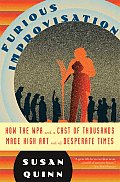
$14.80

$9.99

$3.95
Finest Moment in
Representation of
Catholic Social
Justice Teachings
Representation of
Catholic Social
Justice Teachings
| --James T. Fisher |
Book Tells Catholic Backstory of
1954 Movie, On the Waterfront
1954 Movie, On the Waterfront
In the famous 1954 movie On the Waterfront, starring
Marlon Brando and Eva Marie Saint, the actor Karl Malden
delivers a rousing speech to restless dockworkers known as
"Christ in the Shapeup." Fordham University Professor
James T. Fisher has described it as one of the finest
moments in the representation of Catholic social justice
teachings.
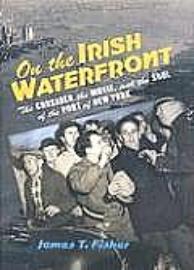
Fisher is the author of On the Irish Waterfront: The
Crusader, the Movie, and the Soul of the Port of New York.
In it, he tells the true story on which the movie was based.
The famous speech was actually delivered on the Jersey
City waterfront in 1948 by the Rev. John M. "Pete"
Corridan.
Corridan was a Jesuit priest attached to the Xavier Labor
School, located at the Church of St. Francis Xavier on
West 16th Street in Manhattan. Although the movie is set in
Hoboken, New Jersey, the actual events took place in the
vicinity of the Chelsea Piers on Manhattan's west side.
Fisher's book refutes the thesis that On the Waterfront was
a metaphor for anti-communism. In fact, it was based on a
true story about organized crime's attempts to undermine
the labor movement and the Jesuits' efforts to resist.
Marlon Brando and Eva Marie Saint, the actor Karl Malden
delivers a rousing speech to restless dockworkers known as
"Christ in the Shapeup." Fordham University Professor
James T. Fisher has described it as one of the finest
moments in the representation of Catholic social justice
teachings.
Fisher is the author of On the Irish Waterfront: The
Crusader, the Movie, and the Soul of the Port of New York.
In it, he tells the true story on which the movie was based.
The famous speech was actually delivered on the Jersey
City waterfront in 1948 by the Rev. John M. "Pete"
Corridan.
Corridan was a Jesuit priest attached to the Xavier Labor
School, located at the Church of St. Francis Xavier on
West 16th Street in Manhattan. Although the movie is set in
Hoboken, New Jersey, the actual events took place in the
vicinity of the Chelsea Piers on Manhattan's west side.
Fisher's book refutes the thesis that On the Waterfront was
a metaphor for anti-communism. In fact, it was based on a
true story about organized crime's attempts to undermine
the labor movement and the Jesuits' efforts to resist.
| "Christ in the Shapeup" |
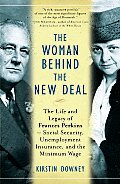
S9.95
| May is Labor History Month |
| Buy Now |

“At last…a serious and engaging study that recovers the work of
Frances Perkins…For any and all of us who value the theological
contributions of laity at work in the world, this study of Perkins is a
true godsend."
—Fredrica Harris Thompsett, Author
In Conversation: Michael Curry and Barbara Harris
“Now is the perfect time for Frances Perkins to remind us of how
important it was to erect the protections she helped design and build.”
—The Rev. Barbara C. Crafton, Author
Jesus Wept: When Faith and Depression Meet
“Donn Mitchell has beautifully understood and conveyed the primary
motivating factor in my grandmother's life and work…Tread
the City's Streets Again takes the reader by the hand and introduces
the soul of Frances Perkins.”
—Tomlin Perkins Coggeshall, Founder
Frances Perkins Center, Newcastle, Maine
“In this well-researched and highly engaging book, Donn Mitchell
introduces…an eminently practical Christian visionary…A must read
in today's often cynical political reality."
—The Rev. Canon C.K. Robertson, Ph.D.
Canon to the Presiding Bishop
For Ministry Beyond the Episcopal Church
Frances Perkins…For any and all of us who value the theological
contributions of laity at work in the world, this study of Perkins is a
true godsend."
—Fredrica Harris Thompsett, Author
In Conversation: Michael Curry and Barbara Harris
“Now is the perfect time for Frances Perkins to remind us of how
important it was to erect the protections she helped design and build.”
—The Rev. Barbara C. Crafton, Author
Jesus Wept: When Faith and Depression Meet
“Donn Mitchell has beautifully understood and conveyed the primary
motivating factor in my grandmother's life and work…Tread
the City's Streets Again takes the reader by the hand and introduces
the soul of Frances Perkins.”
—Tomlin Perkins Coggeshall, Founder
Frances Perkins Center, Newcastle, Maine
“In this well-researched and highly engaging book, Donn Mitchell
introduces…an eminently practical Christian visionary…A must read
in today's often cynical political reality."
—The Rev. Canon C.K. Robertson, Ph.D.
Canon to the Presiding Bishop
For Ministry Beyond the Episcopal Church
| First Book to Explore the Faith Of Frances Perkins |